Where to Find Photography Grants in the USA Right Now
Photography grants in the USA come from three main channels: nonprofit foundations, specialized funds tied to equipment brands or professional organizations, and curated directories like For Photographers Only that track deadlines across dozens of programs at once. Many photography grants in the U.S. offer cash awards, and nearly every U.S.-based program requires winners to file an IRS Form W-9 before funds are released.
Your next move isn’t browsing. It’s building the three documents every grant reader asks for first.
Project description: a tight, one-page narrative that explains what you’re photographing and why it matters.
Portfolio selection: 12 to 20 images that support that narrative, not your greatest hits from unrelated work.
Budget and usage plan: a simple breakdown of what the money actually pays for.
Pro Tip: Draft these three items once, then adapt the language for each grant’s mission statement instead of writing from scratch every time.
Key Takeaways
Winning a U.S. photography grant depends more on a tightly matched proposal, portfolio, and budget than on submitting to the highest number of programs.
Point | Details |
Match portfolio to proposal | Submit 12 to 20 images that directly support your stated project, not unrelated highlights. |
Prepare the W-9 early | Nearly all U.S. cash awards require this IRS form before funds are released. |
Submit before caps fill | Capped programs like LSI’s 200-application window can close before the posted deadline. |
Track deadlines centrally | Forphotographersonly aggregates U.S.-relevant grants, fees, and deadlines in one updated directory. |
Table of Contents
What Are the Technical Image Requirements for Photography Grant Applications?
Most programs specify file type, resolution, and color space, and getting these wrong can disqualify an otherwise strong application before a judge even opens your images. JPEG is the near-universal standard for submission, usually capped between 1MB and 5MB per file, with a minimum longest-edge dimension around 2000 to 3000 pixels for jurying purposes.
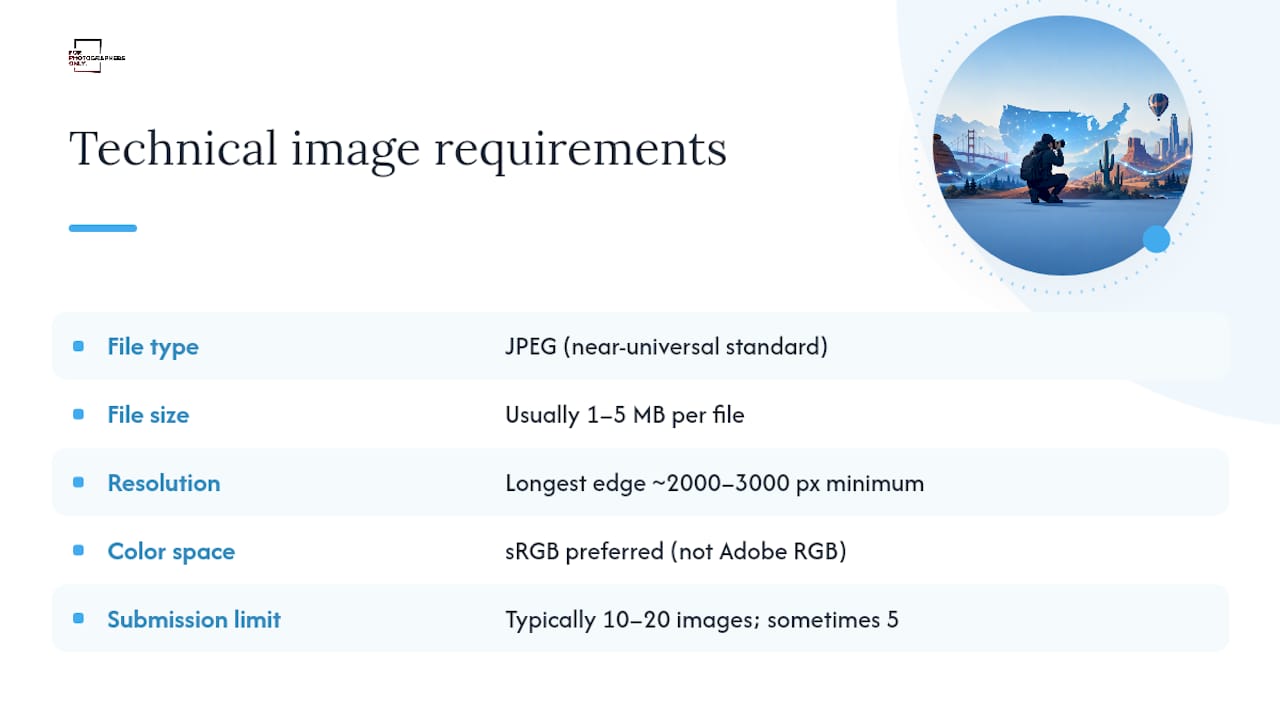
Color space matters more than photographers expect. Grant portals overwhelmingly request sRGB rather than Adobe RGB, since jurying platforms display images through standard web browsers that don’t interpret the wider gamut correctly. Submit in Adobe RGB and your carefully graded blacks and skin tones can shift color on the judge’s screen.
Naming conventions and caption files trip up applicants just as often. Programs modeled on the Stanley Greene Foundation style typically require sequential file numbering that matches a separate caption document listing location, date, and subject for each frame. Skipping captions, or mismatching the numbering, forces reviewers to guess at context, which rarely works in your favor.
Submission limits vary by program but cluster around 10 to 20 images for narrative or documentary grants, and sometimes as few as 5 for single-category awards. Check the exact cap before you start selecting, because trimming a strong 25-image edit down to 15 the night before a deadline produces weaker sequencing than planning for the limit from the start.
When Do Photography Grants Open and How Long Do Decisions Take?
Timelines follow a predictable rhythm once you’ve applied to a handful of programs. Annual grants, the most common structure, typically open submissions several weeks before their deadline and announce winners within a few weeks to months after the window closes. The LSI Photography Grant follows this pattern closely, and its 2026 cycle caps submissions at 200 applications with fixed open and close dates rather than a rolling window.
That cap detail matters more than it sounds. Many competitive programs close early once a fixed number of applications arrives, regardless of the posted deadline. A grant advertised as closing March 31 might stop accepting entries in early March if application volume runs high. Having your materials finished before a call even opens is the single biggest edge you can create for yourself.
Quarterly and rolling programs behave differently. The Black Women Photographers x Nikon Grant Fund runs across four rounds per year, spreading cash and Nikon equipment across multiple recipients rather than concentrating everything into one annual decision. That structure means more entry points during the year, but also shorter individual review windows, often four to six weeks between round close and notification.
Deliverable deadlines after winning vary widely. Some programs expect a finished body of work within six months; others, particularly fellowship-style awards, give a full year.
What Mistakes Sink Photography Grant Applications?
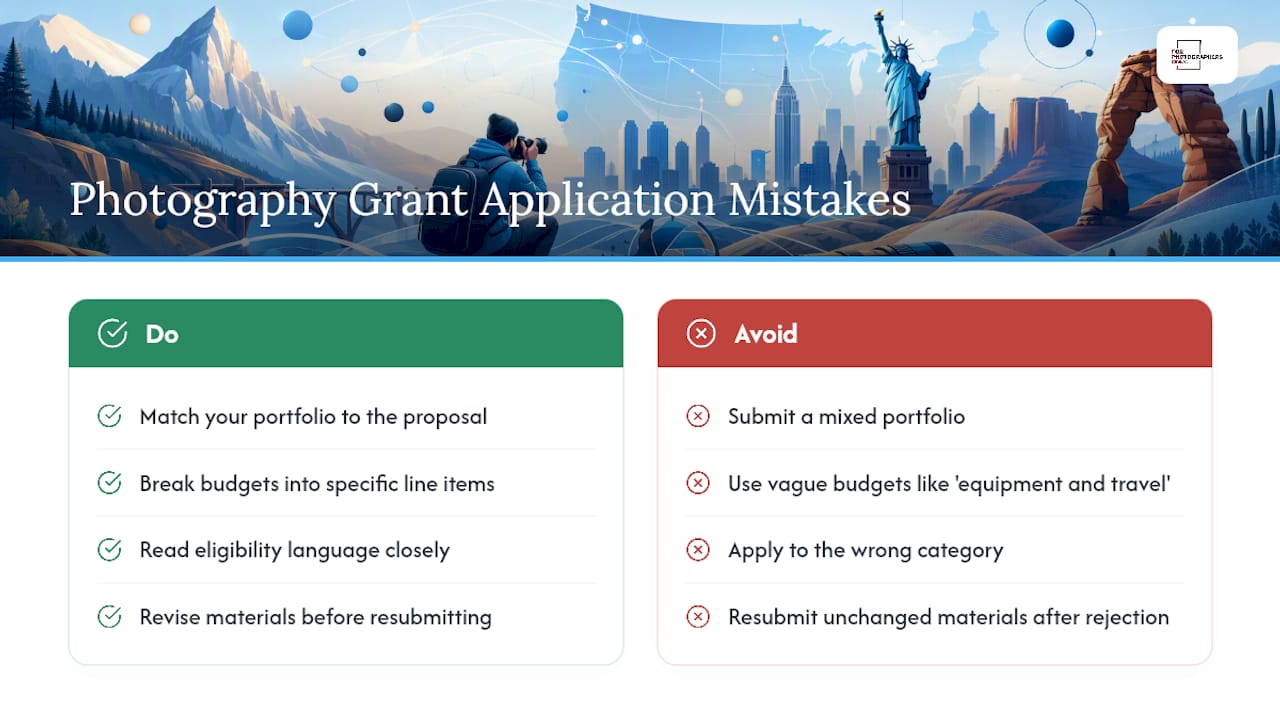
The most common failure is a portfolio that doesn’t match the proposal. Judges read your project description first, then open your images expecting evidence of exactly that project. Submitting a mixed portfolio pulled from several unrelated bodies of work signals an unfocused practice, even when individual frames are technically excellent.
Vague budgets rank second. Grant reviewers read “for equipment and travel” as a red flag rather than a plan. A usable budget breaks costs into specific line items: film stock, a rental lens, three nights of lodging, printing costs for a final exhibition, aligning with expert advice on crafting your business grant budget plan. Programs increasingly expect this level of detail because funders want to see a concrete plan and specific goals, not a general intention to keep shooting.
Missing category eligibility trips up more applicants than you’d guess. The Center for Photographic Art’s CPA Artist Grants run four separate $5,000 awards across categories including emerging, established, landscape, and LGBTQ+ photographers, and applying to the wrong category wastes the fee and the slot. Read eligibility language closely. The Lucie Foundation defines “emerging” specifically as students, photographers within their first five years of practice, or those not earning a majority income from photography. Calling yourself emerging when you don’t fit that definition gets flagged fast.
If you’re rejected, don’t resubmit the same materials untouched the following cycle. Revise the proposal’s opening paragraph to sharpen the stakes, tighten the edit to your strongest 12 images instead of your safest 18, and ask a peer outside your genre to read the budget cold.
What Happens After You Win a Photography Grant?
Winning triggers a second round of paperwork most first-time applicants don’t anticipate. Nearly every U.S.-based cash award requires an IRS Form W-9 before disbursement, since grant income counts as reportable earnings. The Bob and Millie Lynn Grant from the National Press Photographers Foundation states this explicitly: winners must submit a completed W-9 as a condition of receiving the $4,000 award.
Reporting obligations extend beyond tax forms. Most programs require a final report at project completion, sometimes a written summary, sometimes a formal presentation of finished images. Fellowship-style awards, including programs like the Houston Center for Photography’s Annual Fellowship Awards, often build exhibition or publication expectations directly into the award terms rather than treating them as optional.
Equipment-inclusive grants add another layer. If your award includes camera gear, as with the LSI Photography Grant’s cash-plus-Leica-package structure, expect the funder to specify how and where the resulting work should credit their support. Missing a credit line in a published piece can jeopardize eligibility for future cycles with that same funder.
Build a simple folder system the moment you accept an award: tax paperwork, deliverable deadlines, and credit language, kept separate from your creative files. It sounds unglamorous, but it’s the difference between a smooth relationship with a funder and a scramble six months later.
What Jurors Actually Reward
Focused projects with realistic budgets consistently outperform ambitious, unfocused ones. Judges reward clear humanitarian or social relevance, a pattern the W. Eugene Smith Memorial Fund makes explicit in its own criteria. Get your materials ready early. Caps fill, and hesitation costs you a slot.
Find and Track Every Grant Deadline in One Place
Chasing grant deadlines across a dozen foundation websites eats hours you could spend shooting or editing your proposal. Forphotographersonly solves that by keeping every U.S.-relevant grant, fellowship, and contest call on one continuously updated page, complete with fees, deadlines, and prize details, so you’re never digging through outdated PDFs to confirm a submission cap.
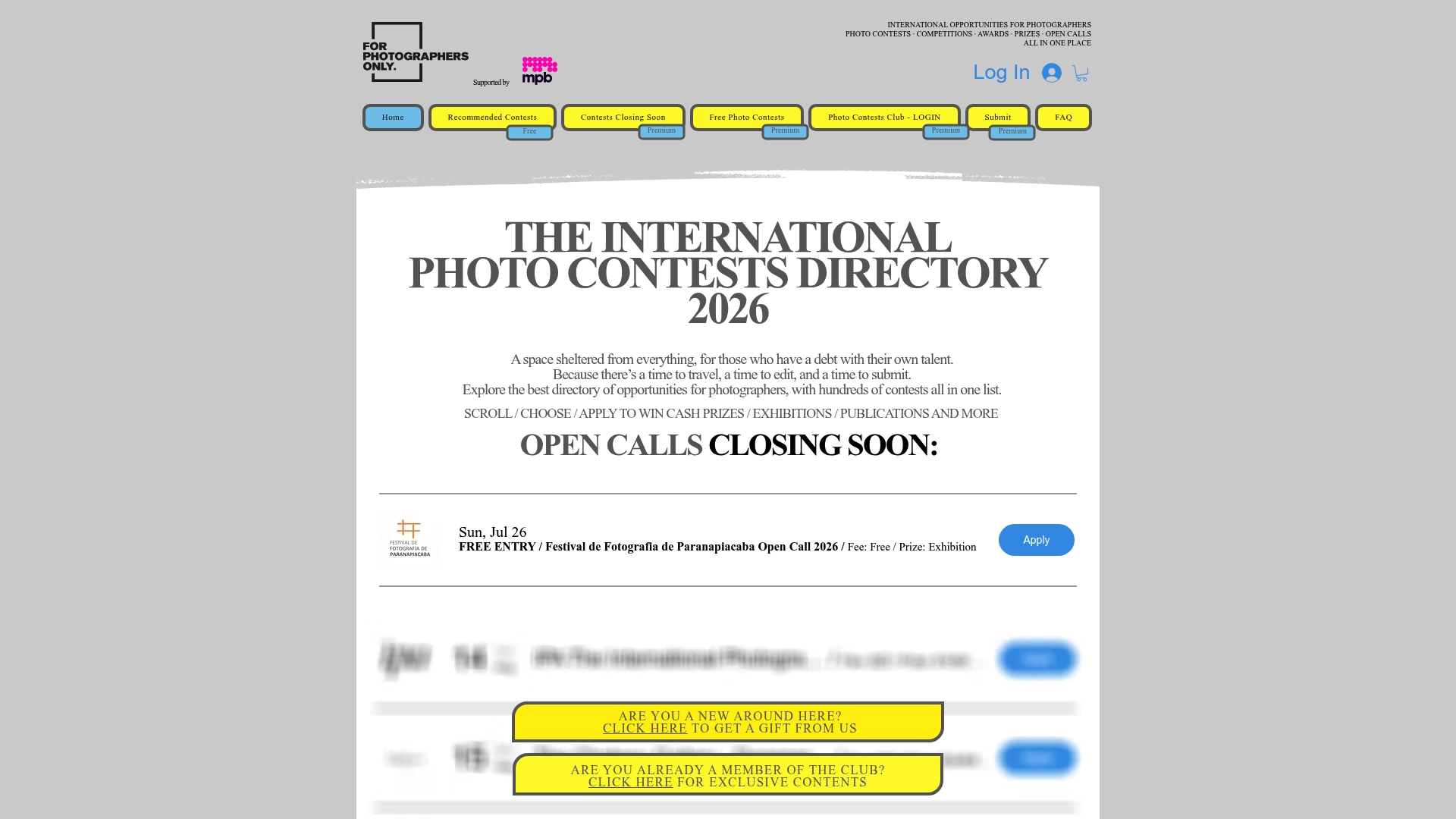
The directory works because it does the discovery labor for you. Instead of bookmarking individual foundation pages and hoping you remember to check back, you get curated filters that surface calls matching your genre and eligibility, plus alerts before submission windows close. That’s especially useful for capped programs like the LSI grant, where missing an early close date by even a few days means waiting another full year.
Browse the current roster on the contests and grants directory, or start with a specific listing like the Creative Quarterly Competition to see how listings present fees, deadlines, and prize structures. Create a free trial account today and get the full listing unlocked before your next deadline sneaks up on you.
Notable U.S.-Accessible Photography Grants Worth Applying To
LSI Photography Grant / Women in Photography Grant: $7,500 cash plus Leica camera and lens, capped at 200 applications. Details here.
Black Women Photographers x Nikon Grant Fund: quarterly cash plus Nikon gear across a year-long program. Fund overview.
Bob and Millie Lynn Grant (NPPF): $4,000 for U.S.-based photojournalists, W-9 required. Grant page.
CPA Artist Grants: four $5,000 awards across emerging, established, landscape, and LGBTQ+ categories. Application details.
Houston Center for Photography Annual Fellowship Awards: U.S.-based fellowship with exhibition components. Listing.
Lucie Foundation Scholarship Program: emerging-category awards around $3,000. Program page.
Ian Parry Photojournalism Grant: up to £10,000 with mentorship and publication, open to U.S. applicants. 2026 details.
Robert Giard Grant for Emerging LGBTQ+ Photographers: category-specific support for underrepresented voices. Listing.
Frequently Asked Questions
What’s the difference between a photography grant and a photography contest? Grants fund work you haven’t finished yet, based on a proposal and budget. Contests judge completed images against a theme, usually with no reporting requirement afterward.
Do I need to be a U.S. citizen to apply for these grants? It depends on the program. The Bob and Millie Lynn Grant specifically requires U.S. residency, while others, like the Ian Parry grant, are open internationally and accept U.S.-based applicants without citizenship restrictions.
How many photography grants should I apply to at once? There’s no fixed number, but reusing a well-built core proposal across several calls, adapted to each funder’s mission, is more efficient than writing from scratch each time.
What image file format do most photography grants require? JPEG in sRGB color space dominates submission requirements, typically with file sizes between 1MB and 5MB and minimum resolution around 2000 to 3000 pixels on the longest edge.
Is there an application fee for most photography grants? Some do, some don’t. CPA Artist Grants charge a modest application fee, while programs like the Black Women Photographers x Nikon Grant Fund are free to enter.
Sources
LSI — 2026 LSI Photography Grant
National Press Photographers Foundation — Bob and Millie Lynn Grant
Recommended